If you're a UK business leader trying to scale in 2026, you've likely run into the same wall: local talent is scarce, salaries are climbing, and your roadmap isn't slowing down to wait for you to find the right hire.
This is exactly why nearshore delivery teams have moved from "alternative option" to default strategy for growth-focused businesses. Not as a cost-cutting shortcut, but as a structural way to scale capacity without sacrificing quality, communication, or control.
Here's what's driving the shift, and how to do it properly.
What Is a Nearshore Delivery Team?
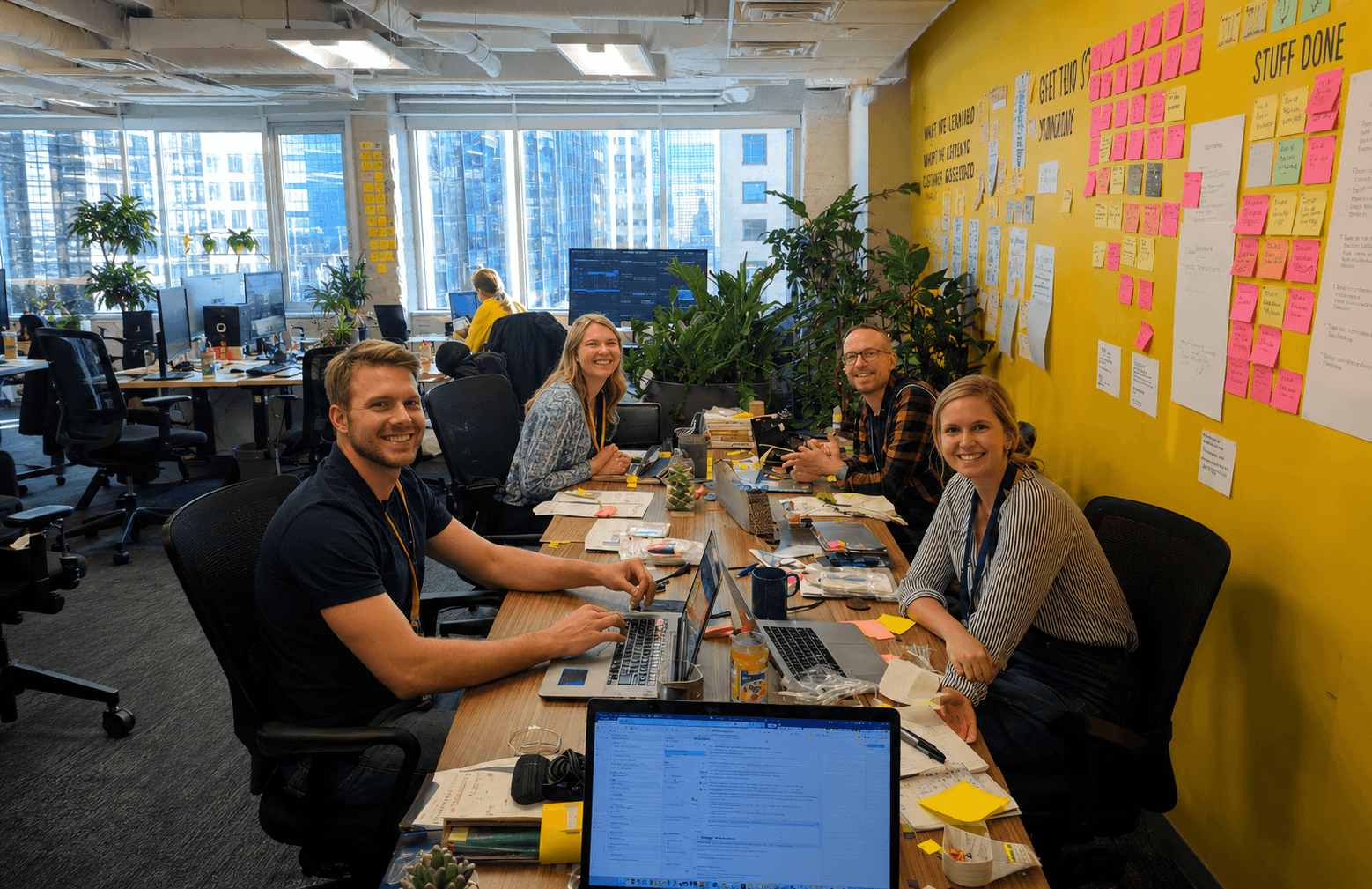
A nearshore delivery team is a group of skilled professionals based in nearby countries, working in or close to your time zone, fully integrated into your existing systems, standups, and workflows. Unlike traditional outsourcing, where a vendor delivers a finished output with limited visibility, nearshore talent functions as a genuine extension of your own team.
For UK businesses, that typically means engineers and specialists based across Central and Eastern Europe — regions with deep, mature talent pools and only a one-to-two-hour time difference from London.
Why Nearshore Is Now the Default, Not the Workaround
The UK talent shortage isn't easing. Demand for skilled engineers and AI specialists in hubs like London, Manchester, and Birmingham continues to outpace supply, and a large majority of employers globally report difficulty filling open roles. Waiting months for the "perfect" local hire is no longer a viable growth strategy.
The cost gap is significant. Nearshore delivery typically costs 30–50% less than equivalent onshore hiring, without the communication friction that often comes with far-offshore arrangements. For a team scaling by even five or six engineers, that difference can free up hundreds of thousands of pounds for the work that actually matters.
Time zone overlap changes everything. Nearshore teams join your standups, unblock issues in real time, and ship alongside your core team — not eight hours behind it. That overlap consistently translates into fewer delays, less rework, and faster time to market compared to offshore arrangements.
It's become a strategic lever, not just a cost lever. In 2026, nearshoring is increasingly used to solve for delivery speed and operational continuity, not only budget. Businesses in financial services, healthtech, and AI are leaning on nearshore teams specifically because they need senior engineering capability now, without the six-month hiring cycle.
The talent quality keeps rising. Eastern Europe in particular continues to produce deep pools of senior engineers across cloud, AI, and enterprise software, often with stronger formal technical education than comparable offshore markets. UK businesses get access to rare, senior-level skillsets without competing directly against FAANG-level salaries.
Nearshore vs. Offshore vs. Local Hiring: The Real Trade-Offs
Each model comes with a different balance of cost, speed, and control:
Local hiring has the highest cost and the slowest speed to hire, especially for senior roles — but it offers full time zone overlap and the easiest communication, since everyone is in the room (or close to it). It's best suited to roles that genuinely need constant in-person presence.
Nearshore delivery costs 30–50% less than local hiring, with a high degree of time zone overlap (typically a 1–3 hour difference) and speed to hire measured in weeks rather than months. Communication tends to be strong, with good cultural and language alignment. It's best suited to scaling delivery capacity and technical depth quickly.
Offshore delivery is the lowest-cost option on paper, though often with hidden friction costs once you account for time zone gaps and communication overhead. Time zone overlap is often minimal or non-existent, and while speed to hire is fast, communication can be a recurring challenge. It tends to work best for high-volume, low-complexity, cost-driven work.
The pattern that's emerged in 2026: nearshore wins when you need senior-level talent, real-time collaboration, and predictable delivery — which, for most growing UK businesses, describes the majority of their hiring need.
How to Build a Nearshore Team That Actually Works
A nearshore engagement only delivers on its promise if it's set up properly. The businesses getting the most value from nearshore delivery in 2026 follow a few consistent practices:
- Treat it as team integration, not outsourcing. The biggest misconception is that nearshore hiring means handing work to an external vendor. Done well, nearshore professionals work inside your tools, your sprint cycles, and your reporting lines — not alongside them.
- Set clear KPIs and a defined process from day one. Sprint velocity expectations, code review standards, and a clear Definition of Done remove ambiguity and get new team members productive faster.
- Plan for occasional in-person contact. Many UK nearshore hubs are a 1–3 hour flight away. Quarterly visits go a long way toward strengthening alignment and trust, even in a primarily remote setup.
- Get full transparency on cost structure. A trustworthy partner should clearly separate base compensation, compliance and employer-of-record costs, and any provider markup — not bundle everything into one opaque monthly fee.
- Start with a pilot. Testing a nearshore partnership on one or two roles before committing long-term lets you validate quality, responsiveness, and fit with minimal risk.
Where Nearshore Delivery Fits Into a Broader Talent Strategy
The strongest businesses in 2026 aren't choosing between local hiring, nearshore delivery, and AI-driven automation — they're combining all three. Nearshore teams provide the technical depth and speed that local hiring alone can't deliver fast enough, while freeing up budget and leadership bandwidth to focus on strategic, high-value work.
How Bearcroft Builds Nearshore Teams That Perform
At Bearcroft, Strategic Nearshore Delivery is one of our three core practice areas, alongside elite recruitment and intelligent systems automation. We operate across two dedicated nearshore hubs, giving you access to vetted, AI-native technical talent that integrates directly into your team — with the oversight, process discipline, and communication standards that make nearshore delivery actually work.
We're not a vendor who disappears after placement. We manage the process end-to-end, from candidate sourcing and dual-gate screening through to ongoing performance support.
Book an intro with Bearcroft to find out how a nearshore delivery team could help you scale faster, without scaling your headcount risk.